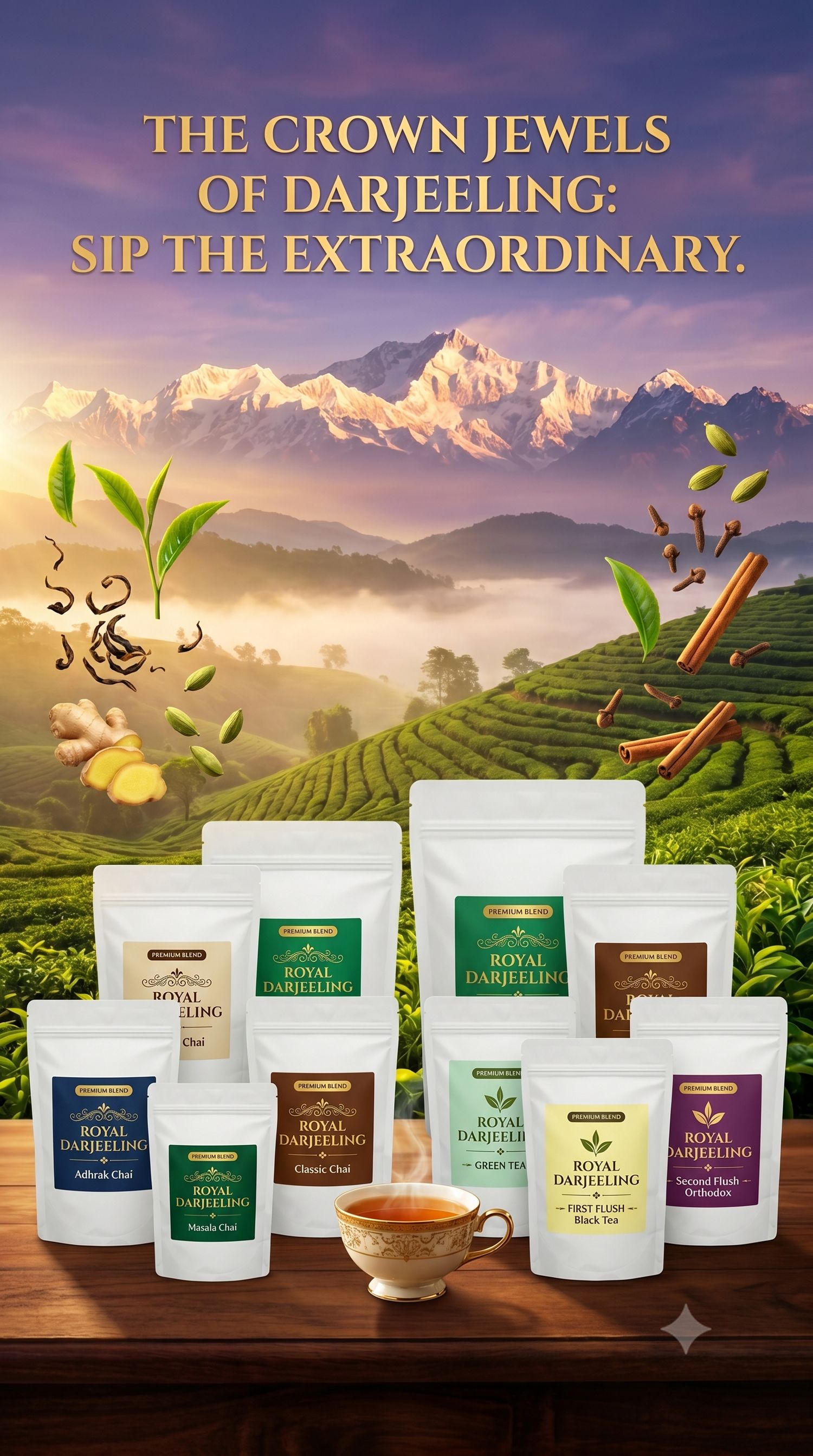
The Champagne of Teas
Grown on steep Himalayan slopes since 1841, Darjeeling tea is one of the most imitated — and most protected — names in the world of tea.
Grown on steep Himalayan slopes since 1841, Darjeeling tea is one of the most imitated — and most protected — names in the world of tea.
British civil surgeon Dr. Archibald Campbell began experimenting with tea cultivation in Darjeeling using Chinese tea seeds, planting the first bushes that would found the region's industry.
The Tea Board of India recognises 87 tea estates across the Darjeeling district as the only legitimate producers of true Darjeeling tea.
Darjeeling tea was the first Indian product to receive a Geographical Indication tag in 2004, and the first Indian commodity to earn EU Protected Geographical Indication status in 2011.
That single, uncomfortable fact is exactly why the Geographical Indication tag exists. Only leaf grown and processed within the 87 registered gardens of the Darjeeling district in West Bengal is legally entitled to carry the name — a protection born out of decades of imitation elsewhere.
It's part of why the name carries so much weight on a shelf. When a tea genuinely earns the right to be called Darjeeling, it's already cleared a bar most teas never have to.
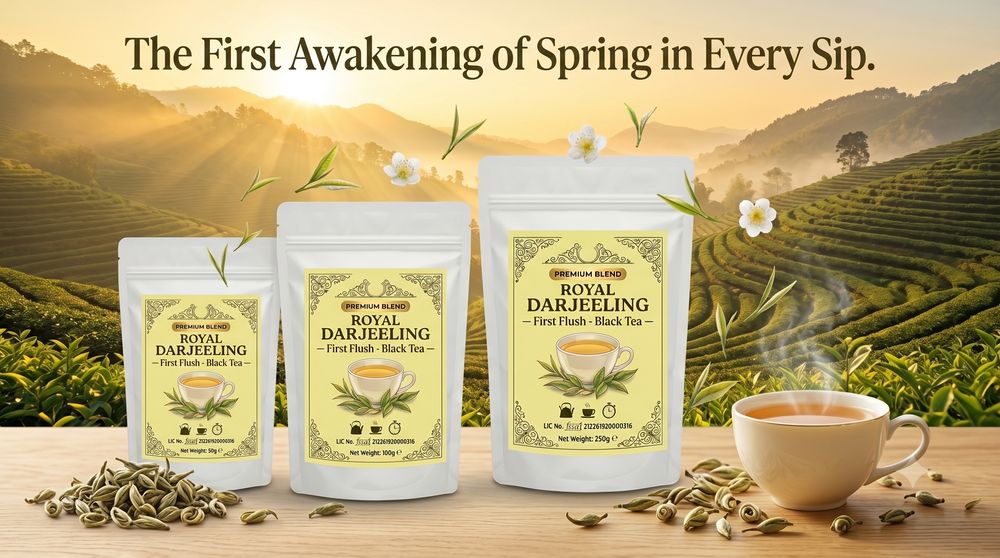
"Flush" refers to a harvest period — and in Darjeeling, the same tea bushes produce four distinct styles of tea across the year, simply by when the leaf is plucked.
The season's earliest pluck, taken from the plant's most tender new growth after winter dormancy. Light-bodied, bright, and delicately floral — the most prized and expensive flush of the year.
Harvested after small leaf-hoppers (Empoasca) feed on the growing shoots, triggering a natural chemical response in the plant. That stress is exactly what produces the fuller-bodied, distinctive muscatel character Darjeeling is famous for.
Rapid monsoon growth produces larger, less delicate leaves. Sturdier and less prized, this flush is typically used in everyday blends rather than sold as a single-estate reserve.
The last pluck before winter dormancy — fuller-bodied and darker than First Flush, with a softer, mellower character of its own.
The muscatel note prized in Second Flush Darjeeling — often described as grape-like or wine-toned — isn't added. It develops naturally, triggered when tiny leafhoppers bite the young shoots and the plant responds by producing a distinct set of aromatic compounds as a defence.
It's a flavour that can't be manufactured or replicated outside this particular set of conditions — one more reason genuine Darjeeling is so difficult to imitate convincingly.
Despite its small growing area, Darjeeling tea is recognised and traded far beyond India's borders.
Long nicknamed for its exclusivity and terroir-driven character, in the same way Champagne is protected and prized among sparkling wines.
Gardens sit on steep Himalayan slopes at elevations that stress the plant just enough to concentrate flavour — part of why Darjeeling can't simply be replicated at scale elsewhere.
The GI tag exists specifically because Darjeeling's name was, and still is, worth counterfeiting — a back-handed compliment to how sought-after the real thing is.
Sources: Wikipedia — Darjeeling tea, Tea Board of India public records on Geographical Indication registration.