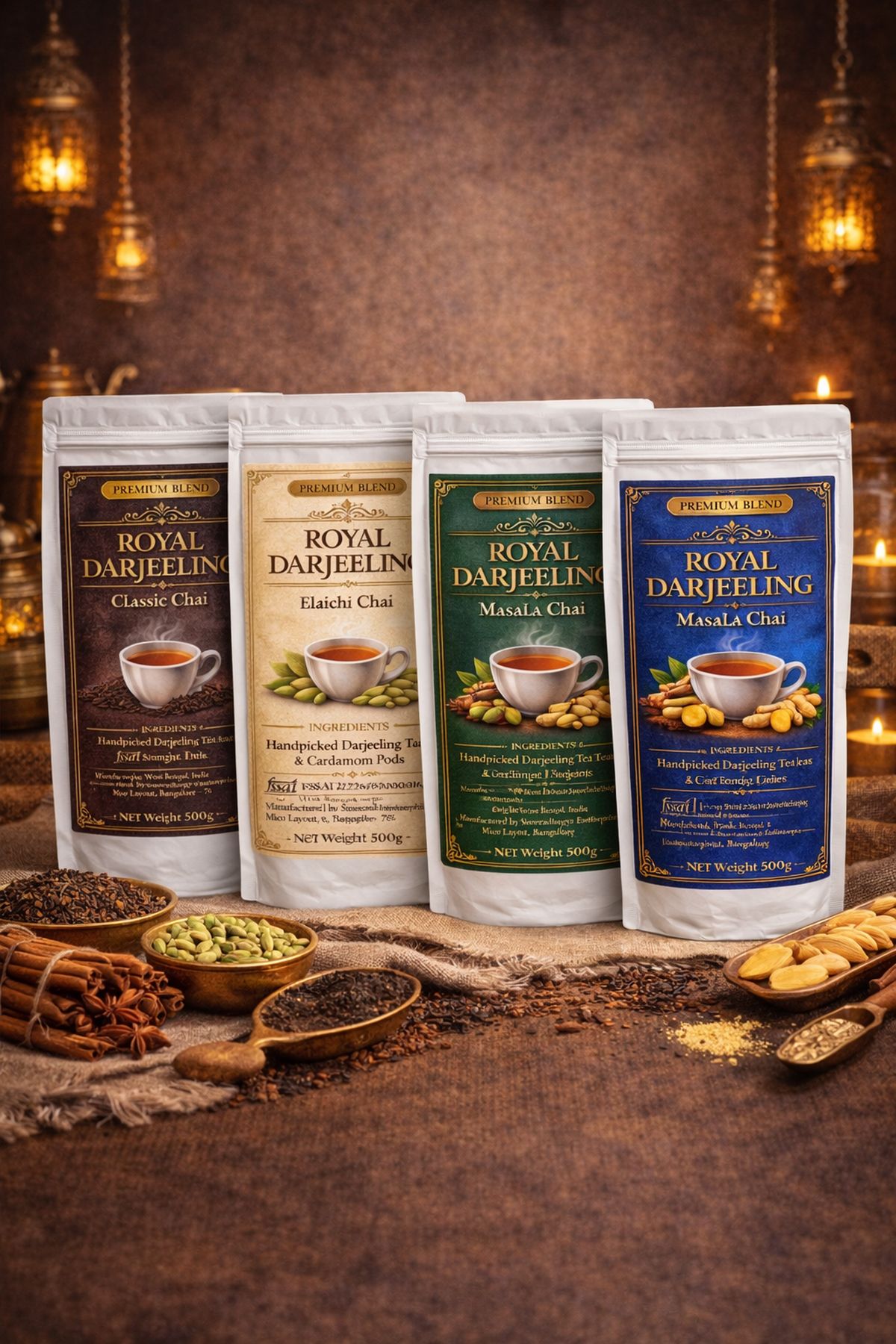
Hand-Picked, Small-Batch,
Unhurried
Every blend we make starts with a question we ask before every harvest: is this good enough to carry the name Royal Darjeeling?
Every blend we make starts with a question we ask before every harvest: is this good enough to carry the name Royal Darjeeling?
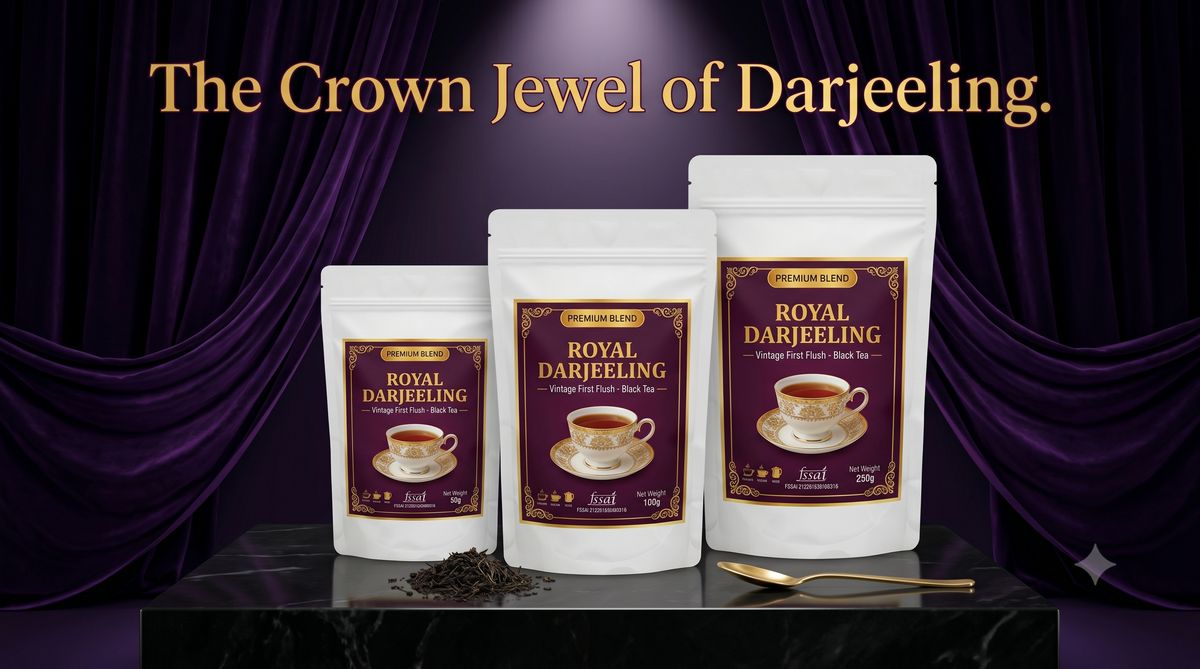
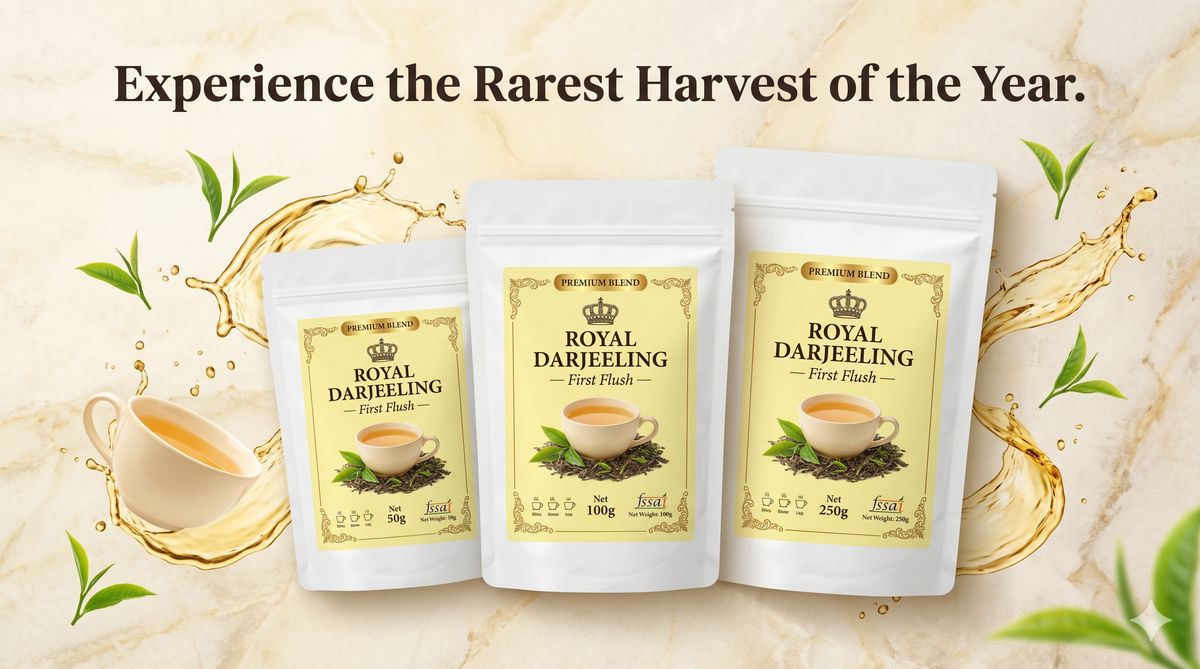
When the Darjeeling hills are still cool with mist, the season's first leaves are hand-picked — light, bright, and faintly muscatel. Long before a leaf ever reaches a Royal Darjeeling pouch, it has already been chosen twice: once by the pluckers who know a good bud by feel, and once more by us, tasting cup after cup until one lot earns the name.
We work with single-estate gardens in the Darjeeling hills rather than blending anonymous lots from wherever tea is cheapest that season. It costs more. It also means the character of a hillside — its altitude, its mist, its particular slant of morning light — actually makes it into your cup.
Masala, Adhrak and Elaichi Chai aren't a lesser cousin to our estate teas — they're built with the same seriousness. We start with the same hand-picked Darjeeling leaf, then layer in whole spices — not powders, not extracts — ginger, cardamom pods and cinnamon bark, chosen for pungency and freshness rather than shelf life.
Each spiced blend is tuned to have its own temperament: Masala Chai bold and rounded, Adhrak sharp and forward, Elaichi fragrant and floral. None of them are trying to be all things to everyone — that's rather the point.
A short list of things we hold ourselves to, blend after blend.
We don't stretch a batch with lower-grade leaf to hit a price point. If the leaf isn't right, the blend doesn't ship.
We'd rather say "the Darjeeling hills" honestly than invent a garden story that sounds better than the truth.
Small-batch means small batches — blended, tasted, and packed in quantities we can actually stand behind.